 9.0
Vacuum sealers / Stainless steel
This set
Stainless Steel Vacuum Sealers
Last refresh 2026-10-20
Durable and easy-to-clean finishes that match professional kitchen aesthetics 6 vacuum sealers · 6 brands
Automatic
For sous vide
Dry and moist mode
Cheap
With built-in cutter
For meal prep
Commercial
Chamber
Cordless
Handheld
With roll storage
For liquids
For marinades
With pulse function
Electric
95kPa
80kPa
Mason jar
Black
Double heat seal
External
Silver
Stainless steel
75kPa
White
Best Stainless Steel Vacuum Sealers
| # | House | Model | Level | Notes | View offer |
|---|---|---|---|---|---|
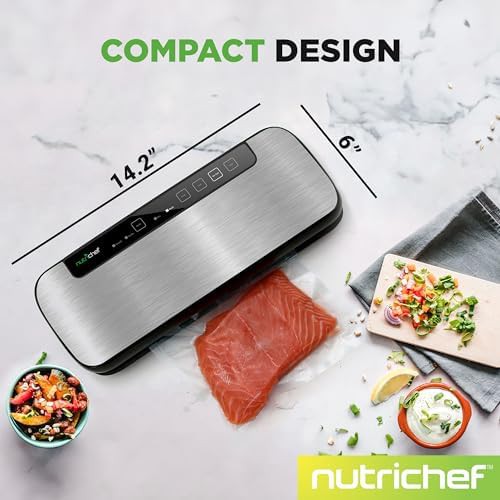
| 1 | Sound Around |
 8.9
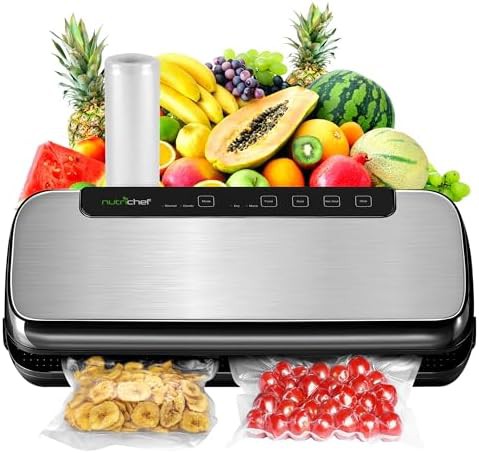
Sound Around Stainless steel sealer with LED touch controls |
$64.99 | 14" · Automatic · Dry and moist mode |
$64.99
View offer
|
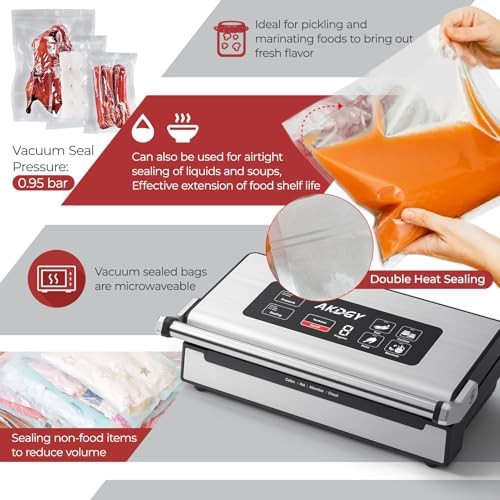
| 2 | AKDGY |
 8.6
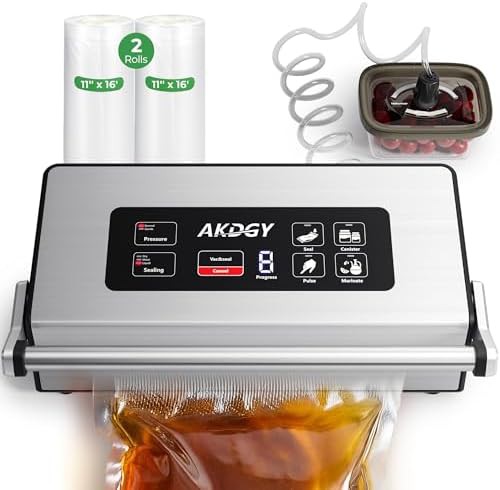
AKDGY Commercial Stainless Steel Double Heat Sealer |
$130 | Dry and moist mode · For liquids · Commercial |
$130
View offer
|
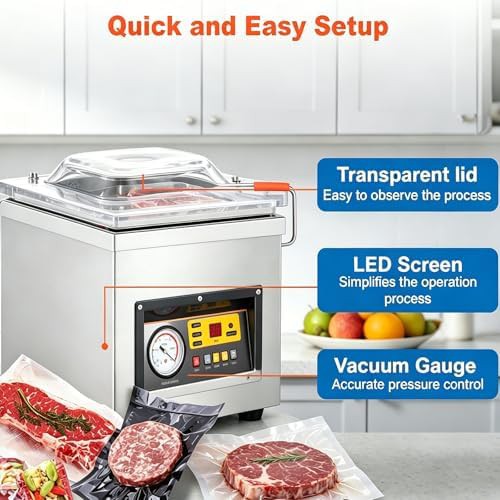
| 3 | Generic |
9.0
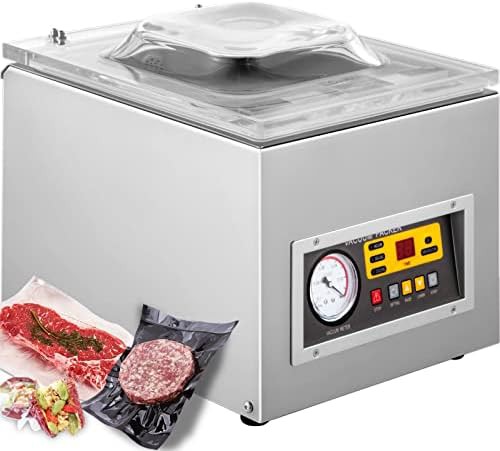
Generic Professional Stainless Steel Chamber Vacuum Sealer
|
$300 | 13" · Automatic · Chamber |
$300
View offer
|
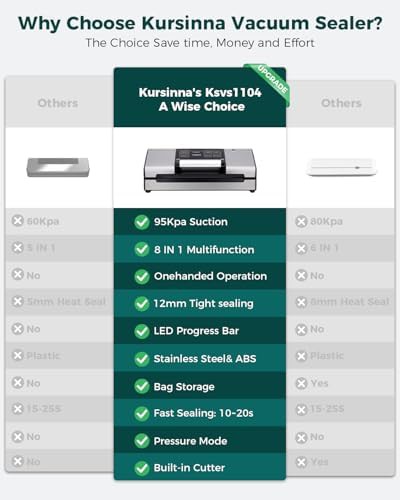
| 4 | Kursinna |
 8.4
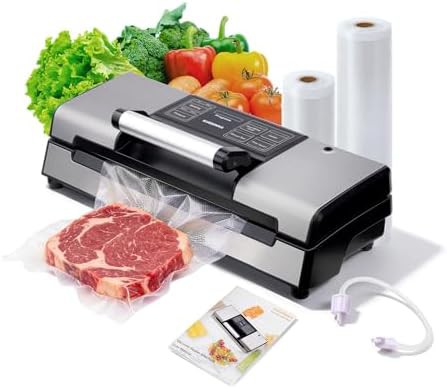
Kursinna Stainless Steel 95kPA High Suction Sealer |
$59.99 | Dry and moist mode · 95kPa |
$59.99
View offer
|
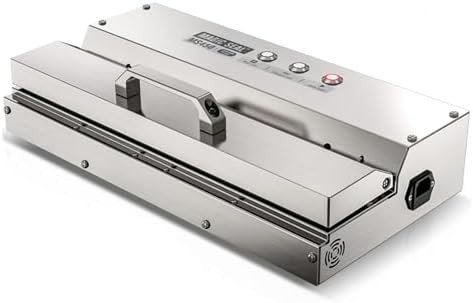
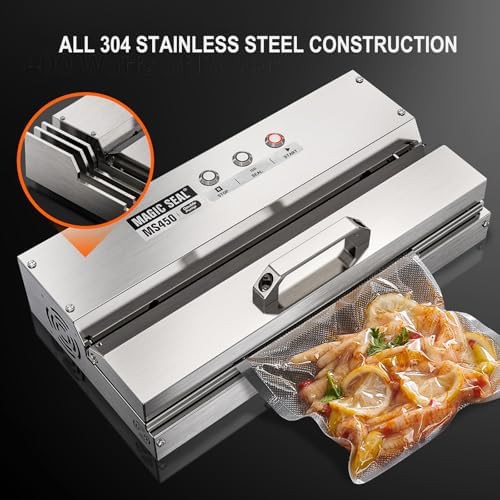
| 5 | MAGIC SEAL |
 8.9
MAGIC SEAL Commercial stainless steel vacuum sealer 95kPa |
$430 | Automatic · Commercial · 95kPa |
$430
View offer
|
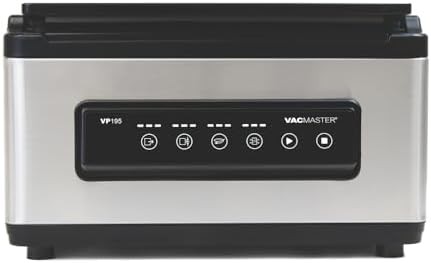
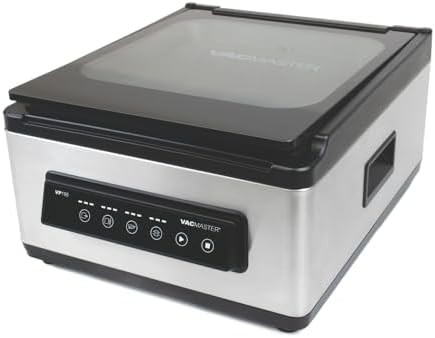
| 6 | Vacmaster |
 6.2
Vacmaster Dual function stainless steel chamber sealer |
— | External · Chamber |
9.0
 8.9
Sound Around
Stainless steel sealer with LED touch controls
$64.99
14" Automatic Dry and moist mode For meal prep
8.9
 8.6
AKDGY
Commercial Stainless Steel Double Heat Sealer
$130
Dry and moist mode For liquids Commercial With pulse function 95kPa Double heat seal
8.4
 6.2
What stainless steel brings to the counter
A stainless steel vacuum sealer is built to sit out and be wiped down, not tucked away. The finish resists fingerprints and food splatter better than glossy plastic, so it holds up to daily use without looking grimy. These machines tend to have a heft that keeps them from sliding when you press the lid or pull the handle.
The material also shows up in the working parts, not just the shell. Sealing bars and chamber interiors in stainless steel handle repeated heat cycles without warping or staining. That matters if you seal several batches in a row, because the surface stays flat and the seal stays even.
Sizes and forms that use it
Stainless steel models range from compact countertop units with a 13 inch sealing length to wider commercial-style machines with a 16 inch bar. Chamber models in this material often have an internal pouch area around 12 by 12 inches, while external-only units take textured pouches 12 inches and longer. Suction power varies across the group, with some rated at 95kPa and others using dual pumps moving 25L per minute.
Where it makes sense over plastic
If the sealer lives on the counter and gets used most days, stainless steel is easier to live with than plastic. It does not crack at the hinge, and it does not yellow from heat or tomato sauce. The tradeoff is weight and cost: a stainless machine is heavier to move and typically costs more than a plastic-bodied one with similar suction.
Quick answers
Stainless steel vacuum sealer questions
Does stainless steel mean the whole machine is metal?
Not always. Many units use stainless steel for the outer shell, lid, and sealing area, while internal frames and some fittings are other materials. The parts that touch food or heat are the ones that benefit most from the steel finish.
Is a stainless steel sealer harder to clean?
It is usually easier. A damp cloth handles most messes, and you do not have to worry about scratching a coated surface. Chamber models still need the gasket and pouch area wiped after wet foods.
Can I use a stainless steel sealer for both dry and moist foods?
Yes, if the model has a moist mode or a chamber design. The steel shell does not limit what you can seal; the mode settings and gasket condition do. Check that the unit lists dry and moist capability if you seal both.
Why do stainless steel sealers weigh more?
The shell and sealing components are denser than plastic, which adds pounds. That weight helps the machine stay put during sealing, but it makes storing it in a cabinet less convenient.