Suction and Pressure
We group models by their kPa ratings, ranging from 75kPa for daily snacks to 95kPa for long-term deep-freeze storage.
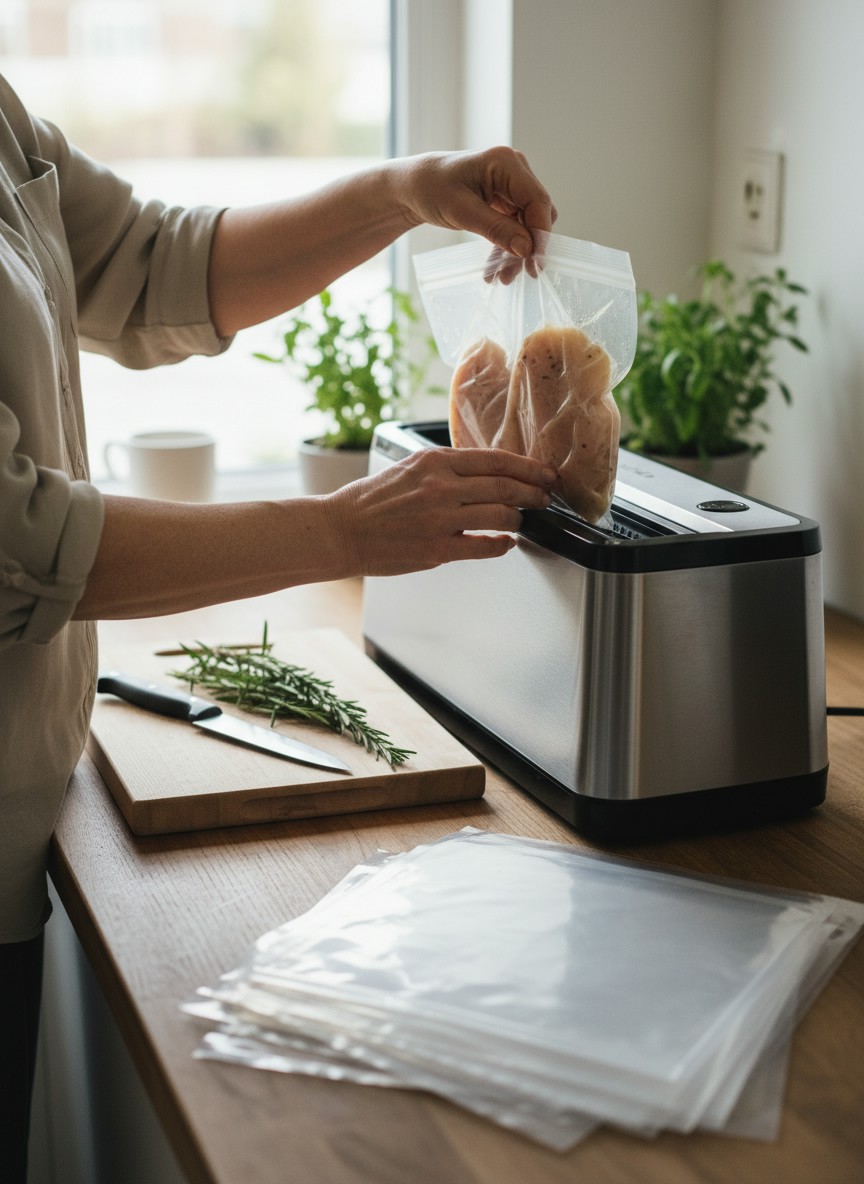
Navigating 101 different models requires an understanding of how suction power and sealing technology impact food longevity. This guide breaks down the essential specs found in our directory.
We bypass the marketing noise to categorize machines by their concrete technical specifications and intended kitchen workflows.
We group models by their kPa ratings, ranging from 75kPa for daily snacks to 95kPa for long-term deep-freeze storage.
Our directory distinguishes between external suction machines, chamber sealers for liquids, and specialized mason jar kits.
We identify machines with built-in cutters, roll storage, and pulse functions that allow for manual control over delicate items.
Each score comes from what shoppers actually said and what we could verify about the vacuum sealers themselves.
When a listing has a public average rating, that number is the main input for the score.
Notes we kept from past checks still nudge the score, though they carry less weight than a public average.
More reviews lift the mark slightly, very few pull it down, and listings that are often out of stock lose a little; a brand score is just those listing scores taken together, and if we have neither an average nor notes, we hide the digit.
External vacuum sealers are the workhorses of the kitchen, offering consistent electric power and often including built-in cutters and roll storage. Handheld and cordless models offer freedom of movement and are excellent for sous vide prep or resealing snacks, though they typically offer lower kPa suction than their plug-in counterparts.
Standard machines often struggle with moisture, which is why dry and moist modes are critical for sealing meats. For those who frequently preserve liquids like stocks or use heavy marinades, a chamber vacuum sealer or a machine with a dedicated liquid mode ensures the seal remains intact without suction failure.
For high-volume meal prep, stainless steel or commercial-grade sealers offer the heat dissipation needed for back-to-back sealing. Features like double heat seals provide an extra layer of security, creating two parallel lines of melted plastic to ensure the vacuum holds even if one area of the seal is compromised.
Open a set, then two brand pages, and compare the listings
One-touch systems that detect, vacuum, and seal without manual intervention
Create airtight pouches perfect for precision low-temperature water bath cooking
Versatile settings that adjust sealing time based on the moisture content of your food
The lower-priced listings in this catalog
Streamline your workflow with integrated sliding blades for custom bag sizing
Portion and preserve weekly meals to keep ingredients fresh and organized
Heavy-duty machines built for high-volume packaging in restaurants and small businesses
Professional-grade machines that equalize pressure to seal liquids and moist foods without mess
Battery-operated freedom for sealing anywhere without needing an outlet
Compact and portable devices perfect for quick sealing and sous vide prep
Keep your vacuum rolls organized and accessible inside the machine housing
Specialized systems designed to handle soups, sauces, and moist foods without suction failure